
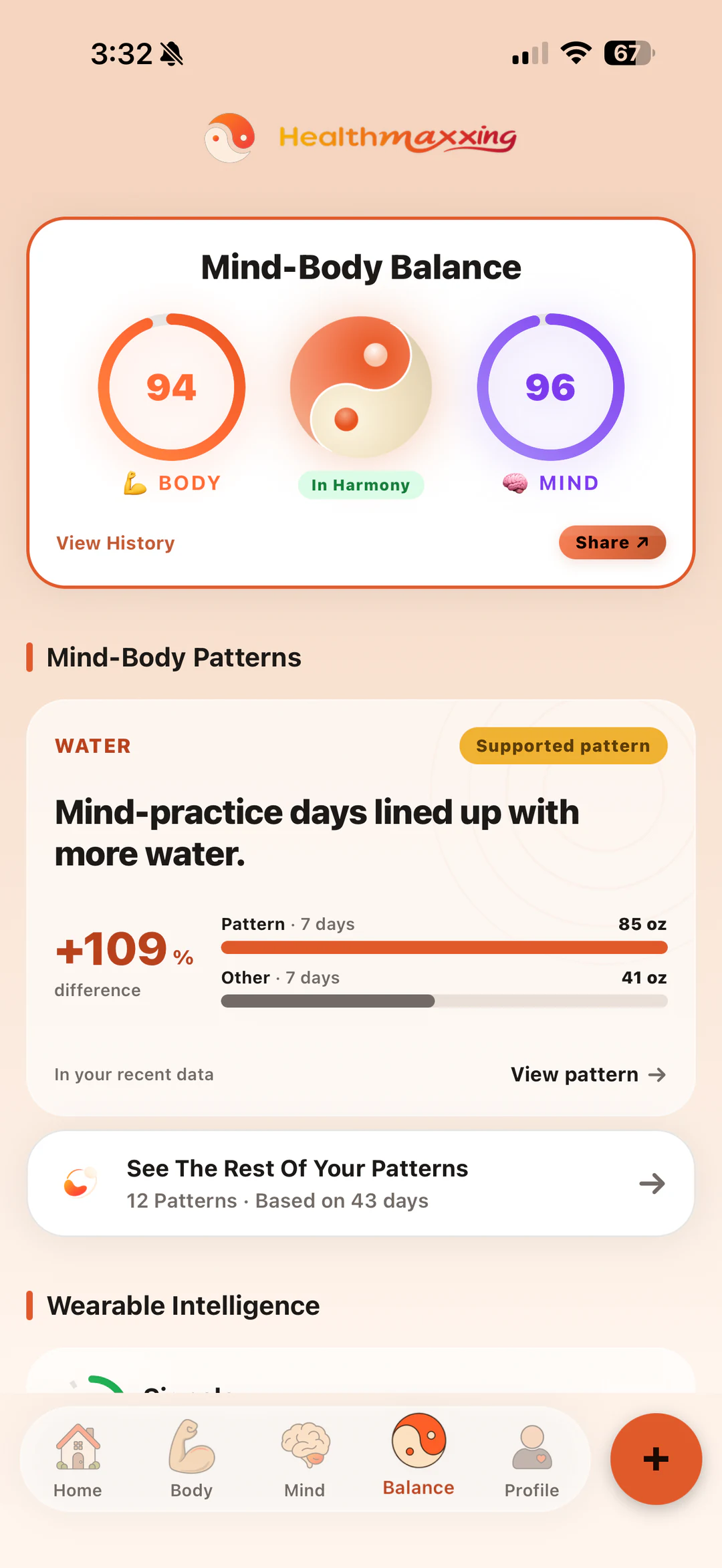
A mind-body tracker records physical behaviors and subjective experience together. HealthMaxxing includes nutrition, exercise, sleep, hydration, mood check-ins, journaling, and breathing so a person can review the day without treating the mental and physical sides as unrelated datasets.
Two sides, one day
| Body signals | Mind signals | Shared context |
|---|---|---|
| Meals, macros, hydration | Mood and energy check-ins | What happened before and after |
| Exercise and steps | Journal and reflection | Schedules, stress, travel, unusual days |
| Sleep and compatible wearable data | Breathing and calm tools | Patterns to watch, not conclusions |
The value is not a bigger dashboard. It is the ability to ask a narrower question with less manual stitching. Instead of exporting sleep from one app and searching a journal in another, the relevant entries can remain part of the same timeline.
What Mind-Body Sync is for
The Sync view puts Body and Mind signals side by side. It is designed as a daily orientation tool: a quick way to notice whether the record looks balanced, incomplete, or worth reviewing. It is not a clinical score and should not be treated as a measure of mental health status.
After enough relevant logging, HealthMaxxing can surface possible relationships across the record. The responsible reading is descriptive: “these two signals tended to coincide in your logged days.” The irresponsible reading is causal: “this behavior explains your health.” The public methodology explains that boundary in detail.
What to look for in a mind-body tracker
- Fast input: the best fields are the ones you can complete consistently.
- Both numbers and words: metrics show structure; short notes preserve context.
- Clear permissions: wearable connections should be optional and limited to categories you choose.
- Honest interpretation: observations should not be dressed up as diagnoses or treatment advice.
- Easy deletion: a health product should explain how to export or remove account-associated data.
- Room to stop: tracking should support reflection, not guilt or compulsion.
A low-friction daily routine
- Morning: confirm sleep and note how you feel.
- During the day: log meals, water, and movement as they happen.
- Evening: add a mood check-in or short reflection.
- Weekly: review one question instead of scanning every chart.
This routine works best when it remains small. More fields do not automatically produce more insight. Missing context, changing definitions, and irregular logging can make a precise-looking chart less useful than a short, honest record.
Where HealthMaxxing fits—and where it does not
HealthMaxxing is built for people who want one consumer wellness app across nutrition, fitness, sleep, mood, and reflection. It is coming soon to iPhone and Android. It is not a therapist, crisis service, medical device, or substitute for condition-specific care.
Need help beyond wellness tracking? Use appropriate clinical or emergency resources for severe symptoms, safety concerns, medication questions, or mental-health crises. An app dashboard is not the right tool for those decisions.
Start with a useful baseline
Before looking for a pattern, build a week of ordinary data. The seven-day whole-self guide gives you a five-minute routine and a downloadable template.